One State, Three Very Different Ways to Drive
New Mexico has a funny way of making you rethink what you need from a vehicle.
Your normal Monday might involve driving across Las Cruces, dropping the kids off at school and sitting in traffic. By Saturday, you could be headed toward the Organ Mountains, White Sands, the Gila National Forest or a campsite where the pavement disappeared several miles ago.
Then winter comes along.
Las Cruces may be relatively mild while a trip into higher elevations brings colder temperatures, snow and completely different road conditions.
So, what’s the best Jeep for New Mexico driving?
There’s no one-size-fits-all answer. For serious off-road adventures and open-air driving, the Jeep Wrangler is hard to beat. For families, road trips, towing and a more refined daily drive, the Jeep Grand Cherokee makes a strong case. If you want something smaller that’s easier to maneuver around town while still offering standard 4×4 capability, the Jeep Compass deserves a look.
Here’s how to figure out which one fits your version of New Mexico.
Best Jeep for New Mexico Driving: Start With What You Actually Do
It’s tempting to start with horsepower, ground clearance or touchscreen size. Don’t.
Start with your normal week.
How far do you commute? Do you have kids? Do you regularly carry passengers? Are your weekends spent hiking and camping, or are you more likely to drive to Albuquerque for a concert and come home the next day?
Do you tow? How often do you actually leave pavement?
Those questions will tell you far more than simply choosing the most rugged-looking SUV.
The Wrangler, Grand Cherokee and Compass all wear the Jeep name, but they’re aimed at different types of drivers.
Jeep Wrangler: For Drivers Who Really Want Adventure
The Jeep Wrangler is the obvious place to start when off-road capability is high on your list.
Every current Jeep Wrangler wears the Trail Rated badge. Depending on configuration, buyers can choose from systems such as Command-Trac and Rock-Trac 4×4, while Rubicon models add serious off-road hardware including available locking differentials and an electronic sway-bar disconnect.
Those features matter if your idea of outdoor recreation involves more than parking at a trailhead.
The Jeep Wrangler is built for drivers who want to explore rougher terrain, crawl over obstacles and travel on roads where extra articulation and low-range gearing can make a real difference.
But there’s another reason people buy Jeep Wranglers that has nothing to do with numbers.
You can take the doors off.
You can open the roof.
You can turn an ordinary drive through southern New Mexico into something that feels like part of the weekend rather than transportation to it.
That’s an experience the Jeep Grand Cherokee and Jeep Compass simply aren’t designed to duplicate.
Who Should Choose the Jeep Wrangler?
The Jeep Wrangler makes the most sense if you regularly explore off pavement or simply love the Jeep lifestyle.
It’s a particularly good match for drivers who enjoy camping, trail riding and outdoor recreation. It also has one of the biggest customization communities in the automotive world, so owners can build their Wrangler around the type of adventures they enjoy.
Want different tires? Easy.
Need additional trail equipment? There are plenty of choices.
Planning a more serious off-road build? Jeep Wrangler owners have been doing that for generations.
The tradeoff is that a vehicle designed around serious capability may not feel exactly like a conventional crossover during everyday driving.
That’s not necessarily bad. It’s part of the Jeep Wrangler’s personality.
But it’s worth understanding before you buy.
Jeep Grand Cherokee: The New Mexico All-Rounder
If the Jeep Wrangler is the adventurer of the group, the Jeep Grand Cherokee is the multitasker.
It can handle a commute, carry a family, tow, travel long distances and still provide genuine Jeep capability when the road gets rough.
Current Jeep Grand Cherokee models offer available advanced 4×4 systems, including Quadra-Trac I and Quadra-Drive II. The available Quadra-Lift air suspension can lower the vehicle at highway speeds and raise it when additional clearance is useful off-road. Selec-Terrain provides selectable modes for different driving conditions.
Properly equipped Jeep Grand Cherokee models can tow up to 6,200 pounds.
That makes it especially interesting for New Mexico families who want one SUV to do nearly everything.
Why the Grand Cherokee Works So Well for Road Trips
New Mexico is a big state.
That’s easy to forget until you’re several hours into a road trip.
A vehicle that feels fun for a 15-minute test drive may feel very different after three hours on the highway.
This is where the Jeep Grand Cherokee starts to make a lot of sense.
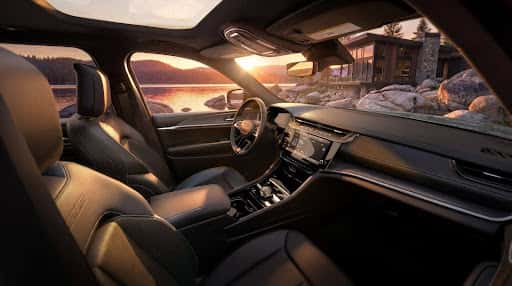
It’s more focused on ride comfort and refinement than the Jeep Wrangler while still offering the capability Jeep buyers expect. Depending on trim and configuration, buyers can find premium seating, advanced infotainment technology and other comfort features that make long drives easier.
There’s also useful cargo space for luggage, camping gear, sports equipment or whatever else ends up coming along.
If your weekends involve driving to an adventure as much as the adventure itself, the Grand Cherokee may be the sweet spot.
Who Should Choose the Jeep Grand Cherokee?
Think of the Jeep Grand Cherokee as the choice for someone who doesn’t want their SUV to specialize too much.
You might need it to handle school drop-off Monday morning.
Tuesday could involve a highway commute.
Friday afternoon, you’re loading luggage for a weekend away.
Saturday, you find yourself on a rough dirt road.
The Jeep Grand Cherokee can move between those jobs without feeling out of place.
It’s also the strongest choice among these three for shoppers with more substantial towing needs, with up to 6,200 pounds of maximum towing capacity when properly equipped.
For many New Mexico households, versatility will matter more than having the most extreme off-road equipment.
Jeep Compass: Don’t Overlook the Smaller Option
Not everybody needs a large SUV.
And not everybody wants one.
That’s where the Jeep Compass becomes interesting.
The current Jeep Compass lineup comes standard with 4×4 across its trims, giving buyers all-weather and light off-road capability in a smaller package.
That smaller footprint can be useful around town.
It’s easier to maneuver in parking lots, takes up less garage space and may simply feel more comfortable to someone who doesn’t want to drive a larger SUV every day.
For a commuter who still wants Jeep capability for occasional trips outside the city, the Compass can make a lot of sense.
What About the Jeep Compass Trailhawk?
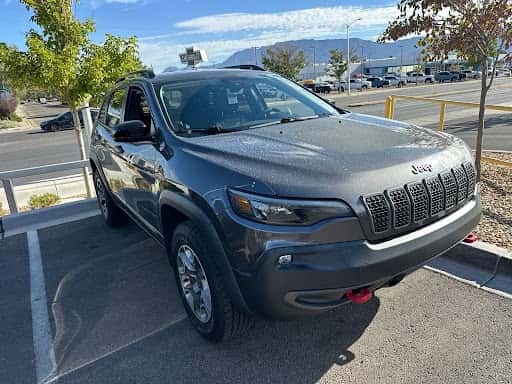
If you like the size of the Compass but want additional off-road capability, take a closer look at the Compass Trailhawk.
Jeep’s Active Drive Low 4×4 system works with the Selec-Terrain traction management system to provide additional capability for drivers who expect to venture beyond ordinary pavement.
That’s an important distinction.
Buying a smaller Jeep doesn’t automatically mean giving up every bit of trail capability.
A Compass Trailhawk can be a useful middle ground for someone who doesn’t need the Wrangler’s more specialized hardware but wants more than a typical small crossover.
Which Jeep Is Best for Las Cruces Commuting?
For primarily urban and suburban driving, the Compass has a strong argument.
Its smaller size can make daily driving and parking easier, while standard 4×4 gives it additional versatility.
The Grand Cherokee is another good choice if you want more passenger space, cargo capacity and comfort.
The Wrangler can certainly commute—thousands of owners use theirs every day—but commuting isn’t the main reason most people fall in love with one.
If most of your miles happen on pavement, test-drive all three before assuming you need the most capable off-road model.
Which Jeep Is Best for New Mexico Trails?
Now the answer changes.
If off-road capability is the priority, start with the Jeep Wrangler.
Jeep Wrangler Rubicon models offer equipment specifically intended for challenging terrain, including Rock-Trac 4×4, available locking differentials and an electronic sway-bar disconnect. Jeep also lists up to a 47.4-degree available approach angle on four-door Wrangler models.
The Jeep Grand Cherokee can also be impressively capable, particularly when properly equipped, but it balances that capability with refinement.
The Jeep Compass Trailhawk provides another option for lighter adventures in a smaller package.
How difficult are the trails you actually plan to drive?
That’s the question that matters.
Which Jeep Is Best for Families?
For many families, the Grand Cherokee is likely to be the first model worth testing.
Its combination of passenger comfort, cargo room, towing capability and available 4×4 systems makes it easy to live with.
The Compass can work well for smaller households or buyers who don’t need as much cargo space.
The Wrangler has plenty of family appeal too, especially for households that build their weekends around outdoor recreation. A four-door Wrangler gives you significantly more practicality than the traditional two-door configuration while keeping the open-air experience.
Don’t choose based on what another family drives.
Bring everyone along for the test drive.
You’ll figure out pretty quickly whether the back seat and cargo area work for your household.
Which Jeep Is Best for Camping?
This depends on what “camping” means to you.
If camping means pulling into an established campground after an easy highway drive, all three can work.
If camping involves rough forest roads and more remote destinations, the Wrangler starts earning its keep.
If you bring a lot of equipment and want a comfortable highway drive before reaching camp, the Grand Cherokee becomes very appealing.
The Compass works well for drivers who pack lighter and want a smaller SUV for everyday life.
Sometimes the best vehicle isn’t the one that’s most capable at the campsite. It’s the one that makes the entire trip—from your driveway to camp and back—work better.
Which Jeep Is Best for Towing?
Among these three, the Grand Cherokee is the clear place to start for buyers with more substantial towing requirements.
Properly equipped current Grand Cherokee models can tow up to 6,200 pounds.
Certain four-door Wrangler Rubicon configurations can offer up to 5,000 pounds of available maximum towing capacity when properly equipped.
Remember that maximum advertised ratings don’t apply to every vehicle on the lot.
Engine, drivetrain, trim and equipment can affect towing capability. Always verify the rating of the specific vehicle you’re considering and make sure it fits the trailer and load you plan to pull.
What About Winter Driving in New Mexico?
This is another situation where location matters.
A mild morning in Las Cruces doesn’t tell you what conditions will be like at higher elevations.
Jeep 4×4 systems can provide additional traction in challenging conditions, but four-wheel drive isn’t a replacement for appropriate tires or careful driving.
That’s important.
People sometimes assume a 4×4 badge makes a vehicle unstoppable in snow. It doesn’t.
Four-wheel drive can help you get moving, but your tires remain critical when you’re braking and turning.
If winter mountain trips are part of your routine, consider the whole setup—not just the drivetrain.
A Jeep for White Sands Is Different From a Jeep for the Mountains
One of the best parts about living in southern New Mexico is how quickly the scenery changes.
You can leave Las Cruces and visit White Sands National Park, head toward the mountains, travel west toward the Gila or spend a weekend exploring somewhere completely different.
That’s why there isn’t one universal answer to the question of which Jeep belongs here.
A Wrangler owner may be looking for the next trail.
A Grand Cherokee owner may want to load the family and luggage for a comfortable three-day trip.
A Compass owner may want something manageable for Monday through Friday that still isn’t afraid of a weekend away from pavement.
All three approaches make sense.
Why Visit a Jeep Dealership Before Deciding?
Online research can narrow your choices, but this is one decision that’s worth making from behind the wheel.
At a Jeep dealership, you can compare seating position, visibility, passenger room, cargo space and driving feel in ways a specification chart can’t communicate.
At Viva Chrysler Dodge Ram Jeep Fiat, 860 N Telshor Blvd., Las Cruces NM 88011, shoppers can compare Jeep models and decide which type of SUV best fits their daily driving and weekend plans.
Tell the dealership how you actually drive.
If you rarely leave pavement, say so.
If you spend weekends on trails, mention it.
If you have a camper you need to tow, bring the trailer specifications.
Good vehicle shopping starts with an honest description of what you need.
Frequently Asked Questions About Choosing a Jeep in New Mexico
What is the best Jeep for off-roading in New Mexico?
For drivers who prioritize serious off-road capability, the Jeep Wrangler—particularly a Rubicon configuration—is the natural place to start because of its specialized 4×4 hardware, solid axles and available trail-focused equipment.
What is the best Jeep for everyday driving in Las Cruces?
The Compass can be attractive for commuters who prefer a smaller SUV, while the Grand Cherokee offers more space and refinement. The better choice depends on how much passenger and cargo room you need.
Which Jeep is best for a family?
The Grand Cherokee is worth strong consideration for families because it combines passenger and cargo space with available 4×4 capability and substantial towing capacity. Families who prioritize outdoor recreation may also prefer a four-door Wrangler.
Which Jeep is best for road trips?
The Grand Cherokee’s emphasis on comfort, cargo capacity and highway refinement makes it particularly well suited to longer trips. The right answer can change if the destination involves difficult off-road terrain.
Is the Jeep Compass good for New Mexico driving?
Yes. The current Compass lineup comes standard with 4×4, and its smaller size can work well for everyday driving while still giving owners additional capability for changing conditions.
Is a Jeep Wrangler practical as a daily driver?
It can be, especially in four-door form. However, buyers should test-drive one and compare it with more road-focused models such as the Grand Cherokee or Compass. Wrangler’s biggest advantages become apparent for drivers who value open-air driving and serious off-road capability.
Which Jeep is best for towing?
Among the Wrangler, Grand Cherokee and Compass, shoppers with more substantial towing needs should start with the Grand Cherokee. Properly equipped models can tow up to 6,200 pounds.
Do I need 4×4 to drive in New Mexico?
Not every New Mexico driver needs 4×4. It becomes more useful for people who regularly encounter dirt roads, rough terrain or winter conditions. Your tires, driving habits and the places you travel matter just as much.
The Best Jeep Is the One That Fits Your New Mexico
So, what’s the answer?
If you want a Jeep primarily because you dream about trails, open-air driving and getting farther from pavement, start with the Wrangler.
If you want one SUV that can commute comfortably, carry a family, tow and still handle adventures when the pavement ends, take a serious look at the Grand Cherokee.
If you want something smaller and easier to live with every day while retaining standard 4×4 capability, don’t overlook the Compass.
Finding the best Jeep for New Mexico driving isn’t about choosing whichever model has the most extreme specifications. It’s about matching the vehicle to the places you actually go.
Visit Viva Chrysler Dodge Ram Jeep Fiat at 860 N Telshor Blvd., Las Cruces NM 88011 to compare the Jeep Wrangler, Jeep Grand Cherokee and Jeep Compass in person.
Because in New Mexico, the question isn’t simply where you drive today.
It’s where you might decide to go this weekend.