One Truck Has to Handle a Lot in Southern New Mexico
A pickup in southern New Mexico rarely gets used for just one thing.
Monday morning might mean a highway commute. Saturday could involve a trailer, a load of home-improvement supplies or camping gear piled into the bed. Add long stretches of highway, summer heat, mountain trips and the occasional dirt road, and it becomes pretty clear why choosing the right truck matters.
For drivers shopping for a 2027 RAM 1500 near Holloman AFB NM, the latest RAM 1500 is worth a closer look because it doesn’t force every truck buyer into the same setup. There are multiple engines, work-focused configurations, upscale trims and off-road options. Maximum available towing reaches 11,530 pounds, while maximum available payload is 2,340 pounds when properly equipped.
More importantly, you can choose a RAM 1500 based on what you’ll actually do with it instead of buying capability you’ll never use.
2027 RAM 1500 Near Holloman AFB NM: Four Very Different Engine Choices
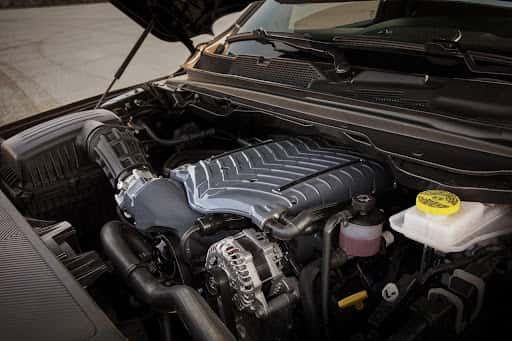
One of the most interesting things about the 2027 RAM 1500 is what’s under the hood or, more accurately, what can be under the hood.
The lineup offers the 3.6-liter Pentastar V6, 5.7-liter HEMI V8, 3.0-liter Hurricane inline-six and High-Output 3.0-liter Hurricane.
That gives buyers some real choices.
The Pentastar V6 produces 305 horsepower and 269 lb-ft of torque. When properly equipped, it provides the lineup’s maximum available payload of 2,340 pounds and can tow up to 8,100 pounds in a 4×2 configuration.
Move to the 3.0-liter Hurricane and output jumps to 420 horsepower and 469 lb-ft of torque. Properly equipped, this engine can tow up to 11,530 pounds.
Drivers wanting even more performance can look at the High-Output Hurricane, which produces 540 horsepower and 521 lb-ft of torque.
And yes, the HEMI is back. The available 5.7-liter HEMI V8 produces 395 horsepower and 410 lb-ft of torque.
That’s good news for shoppers who simply like the feel and sound of a V8 truck.
Which RAM 1500 Engine Makes the Most Sense?
This is where it’s better to forget about choosing the biggest number and think about your actual routine.
Someone using a truck primarily for commuting, weekend projects and lighter hauling may find the Pentastar V6 gives them everything they need.
Regular towing changes the conversation. The standard-output Hurricane provides significantly more torque and offers the highest available towing capacity in the mainstream RAM 1500 lineup when properly configured.
Then there are drivers who simply want more power. The High-Output Hurricane’s 540 horsepower makes the RAM 1500 feel very different from a traditional work pickup. And some people want a HEMI because they want a HEMI. There’s nothing complicated about that. The point is that RAM gives shoppers options instead of pretending every pickup owner has the same priorities.
A Good Fit for Life Around Holloman AFB
Holloman Air Force Base sits west of Alamogordo in New Mexico’s Tularosa Basin, with Highway 70 providing the primary route through the area. The base’s official newcomer information also highlights nearby destinations such as White Sands National Park, Lincoln National Forest, Cloudcroft and Ruidoso.
That makes this part of New Mexico an interesting place to own a truck.
You may spend most of the week on pavement and then head into completely different terrain on your days off. Drive toward Cloudcroft and you’re climbing into the Sacramento Mountains. Head toward White Sands and the scenery changes again. A longer weekend can take you toward Ruidoso, Las Cruces or farther into southern New Mexico.
A RAM 1500 works well in that environment because it can be comfortable enough for the highway without giving up the utility that makes owning a truck worthwhile.
Towing Capability for Work and Weekends
For some buyers, towing is the reason to own a pickup in the first place.
Properly equipped, the 2027 RAM 1500 can tow up to 11,530 pounds. Actual towing capability depends on the engine, drivetrain, configuration, passengers, cargo and equipment, so it’s important to match the exact truck to the trailer rather than relying only on the model’s maximum advertised figure.
RAM also offers technology designed to make hitching and towing less frustrating.
Available Trailer Hitch Line-Up Assist can help steer the truck toward the trailer tongue. Trailer Reverse Guidance with Dynamic Gridlines displays the trailer’s predicted path while backing and can warn the driver about a potential jackknife situation. Available telescopic trailer tow mirrors can improve visibility around a trailer.
Those aren’t glamorous features, but they’re the kind you appreciate when you’re standing in a driveway trying to connect a trailer without making five attempts.
The Truck Bed Can Work Smarter Too
A pickup bed is useful by itself, but RAM offers a few ways to make it more practical.
The available RamBox Cargo Management System provides lockable and drainable storage built into the sides of the bed. It includes interior lighting and a 115-volt outlet.
That space can work well for tools, recovery equipment, outdoor gear or smaller items you don’t want sliding around the bed.
There’s also an available multifunction tailgate with 60/40 split swing-away doors. They can make it easier to reach into the bed, especially when you’re loading or unloading in a tighter space.
The available Onboard Power System can provide up to 2 kilowatts through two 120-volt outlets, giving owners another option for powering tools or equipment away from a conventional outlet.
For people who actually use their trucks, little details like these can matter more than flashy features.
What About Off-Road Driving?
You don’t need to be rock crawling every weekend to benefit from a truck that’s comfortable away from pavement.
For drivers who spend more time exploring dirt roads, campsites and rougher terrain, the 2027 RAM 1500 lineup includes off-road-oriented choices such as the Rebel and Warlock. Those models offer 33-inch tires, a one-inch raised ride height, lifted suspension and Bilstein performance-tuned shocks.
Available Selec-Speed Control can also help maintain a consistent speed while traveling up hills, down slopes and across trails.
That’s useful around New Mexico because an ordinary weekend trip can quickly involve pavement, gravel and elevation changes.
It’s Surprisingly Comfortable for a Pickup
Older trucks often made you choose: utility or comfort.
Modern RAM 1500 models blur that line considerably.
At the upper end, the Tungsten offers 24-way power-adjustable heated, ventilated and massaging front seats. RAM also offers reclining rear seats and up to 44.8 inches of rear legroom on certain configurations.
You certainly don’t need to buy the most expensive trim to get a comfortable truck, but those features show how broad the RAM 1500 lineup has become.
A Tradesman can be configured as a straightforward work truck. A Rebel can lean toward off-road use. A Limited or Tungsten can feel closer to a luxury vehicle inside.
They’re all RAM 1500s, but they’re aimed at very different owners.
Technology That Helps Instead of Getting in the Way
Today’s pickup buyers expect technology, but there’s a difference between technology that’s interesting in the showroom and technology that’s actually useful six months later.
The 2027 RAM 1500 offers more than 50 combined available inches of digital display area across its various screens and configurations. An available 14.5-inch Uconnect 5 center touchscreen and available 10.25-inch front-passenger interactive display are among the technology options offered across the lineup.
Depending on configuration, buyers can also find features that support towing, navigation, entertainment and everyday driving.
The important part is choosing the technology you’ll actually use rather than checking every option box.
What Should You Look for During a Test Drive?
A test drive should involve more than driving around the block and deciding whether you like the color.
Pay attention to seating comfort and visibility first. If you’re going to commute regularly between communities in southern New Mexico, you’ll spend a lot more time sitting in the truck than admiring it from the driveway.
Try the infotainment system. Check rear-seat room if you regularly carry passengers. Look at the bed and storage areas. If you tow, ask about the towing rating of that specific configuration.
And drive more than one engine if possible.
A Pentastar V6 and High-Output Hurricane RAM 1500 may wear similar sheet metal, but they’re going to feel very different from behind the wheel.
Why Shop at a RAM Dealership?
Shopping at a knowledgeable RAM dealership becomes especially useful when a truck offers this many configurations.
Maximum towing and payload numbers don’t apply equally to every RAM 1500. Engine, drivetrain, cab, bed, axle ratio and equipment can all influence what a particular truck can safely handle.
That’s why it’s worth explaining what you actually plan to do with the truck.
At Viva Chrysler Dodge Ram Jeep Fiat, 860 N Telshor Blvd., Las Cruces NM 88011, shoppers can compare RAM trucks and discuss which configuration makes sense for commuting, towing, hauling, recreation or a combination of all four.
For customers coming from the Holloman AFB and Alamogordo area, making the trip to Las Cruces also provides an opportunity to compare different RAM 1500 configurations in person instead of trying to make the entire decision from a specification chart.
Frequently Asked Questions About the 2027 RAM 1500
What engines are available in the 2027 RAM 1500?
The mainstream 2027 RAM 1500 lineup offers a 3.6-liter Pentastar V6, available 5.7-liter HEMI V8, 3.0-liter Hurricane and High-Output 3.0-liter Hurricane. Horsepower ranges from 305 with the Pentastar to 540 with the High-Output Hurricane.
How much can the 2027 RAM 1500 tow?
The 2027 RAM 1500 offers a maximum available towing capacity of 11,530 pounds when properly equipped. The exact rating varies by configuration, so buyers should verify the rating of the specific truck they are considering.
What is the maximum payload of the 2027 RAM 1500?
Maximum available payload is 2,340 pounds when properly equipped.
Does the 2027 RAM 1500 still offer a HEMI V8?
Yes. The 5.7-liter HEMI V8 is available on select 2027 RAM 1500 models and produces 395 horsepower and 410 lb-ft of torque.
Which 2027 RAM 1500 engine has the most horsepower?
Among the mainstream engine choices, the High-Output 3.0-liter Hurricane produces 540 horsepower and 521 lb-ft of torque. RAM also offers specialized high-performance models beyond the regular lineup.
Is the RAM 1500 good for off-road driving in New Mexico?
RAM offers off-road-focused models and equipment, including the Rebel and Warlock with 33-inch tires, raised ride height, lifted suspension and Bilstein performance-tuned shocks. Buyers expecting frequent off-road use should compare those configurations with more road-oriented trims.
Where can I shop for a 2027 RAM 1500 near Holloman AFB?
Drivers from the Holloman AFB and Alamogordo area can visit Viva Chrysler Dodge Ram Jeep Fiat at 860 N Telshor Blvd., Las Cruces NM 88011 to explore RAM truck options and discuss the configuration that fits their needs.
Find the RAM 1500 That Fits What You Actually Do
There’s no single version of the RAM 1500 that makes sense for everybody—and that’s probably one of the truck’s biggest strengths.
One owner may want a straightforward pickup for commuting and weekend projects. Another needs serious towing capability. Someone else wants an off-road-ready truck for exploring New Mexico. And there will always be drivers who simply want the sound and character of a HEMI V8.
The 2027 lineup gives all of them somewhere to start.
If you’re researching a 2027 RAM 1500 near Holloman AFB NM, think beyond horsepower alone. Consider what you’ll tow, how much you’ll carry, where you’ll drive and how much time you’ll spend inside the truck.
Then visit the dealership of Viva Chrysler Dodge Ram Jeep Fiat at 860 N Telshor Blvd., Las Cruces NM 88011 to compare RAM 1500 configurations in person. The best truck isn’t necessarily the one with the biggest number on the specification sheet. It’s the one that fits what you actually need it to do.